
Introduction sign your car brake service
Your car’s braking system is one of the most important safety features of your vehicle. Proper maintenance car car brake service helps you stop safely, maintain control, and protect yourself and other road users. However, worn brake pads, damaged components, and other brake problems can reduce braking performance over time.
Knowing the warning signs can help you identify issues early and avoid more expensive repairs. In this blog, we explain five common signs that your service needs professional service and why timely repair is essential.
Why Is Regular Brake Service Important?
Your car’s braking system is essential for safe driving. Regular brake service helps maintain braking performance and identify potential brake problems before they become serious. Understanding the warning signs can help you know when your car needs professional brake repair.
1. Squeaking or Grinding Noises
One of the most common signs of brake problems is an unusual noise when you press the brake pedal.
Squeaking may indicate worn brake pads, dust, moisture, or vibration. Grinding noises can indicate that brake components are severely worn or that metal parts are making contact.
If you hear persistent grinding, stop driving as soon as it is safe and arrange professional assistance. Timely brake repair can help prevent further damage to the braking system.
2. The Brake Pedal Feels Soft or Spongy
A brake pedal that feels unusually soft, spongy, or sinks farther than normal may indicate a problem with the hydraulic braking system.
Possible causes include air in the brake lines, a fluid leak, or a failing master cylinder. These issues can affect your ability to stop safely.
Do not ignore changes in brake pedal feel. If the pedal sinks, braking performance is reduced, or you suspect a fluid leak, stop in a safe place and arrange for the vehicle to be inspected before driving again.
3. Your Car Pulls to One Side While Braking
If your car pulls to the left or right when you press the brake pedal, it may indicate a problem with the braking system. This can make your vehicle difficult to control and increase the risk of an accident.
Common causes include uneven brake pad wear, a sticking brake caliper, contaminated brake components, or problems with the tyres and suspension.
4. The Brake Warning Light Appears
Modern cars use dashboard warning lights to alert drivers to possible braking-system issues. A brake warning light may indicate low brake fluid, a parking brake that is still engaged, or a fault in the braking system.
An ABS warning light may indicate a problem with the anti-lock braking system. The meaning of each warning depends on the vehicle.
Check your owner’s manual and do not ignore persistent warnings. If the brake warning light remains on after releasing the parking brake, or if braking feels abnormal, stop safely and seek professional assistance.
What Is Included in Professional Car Brake Service?
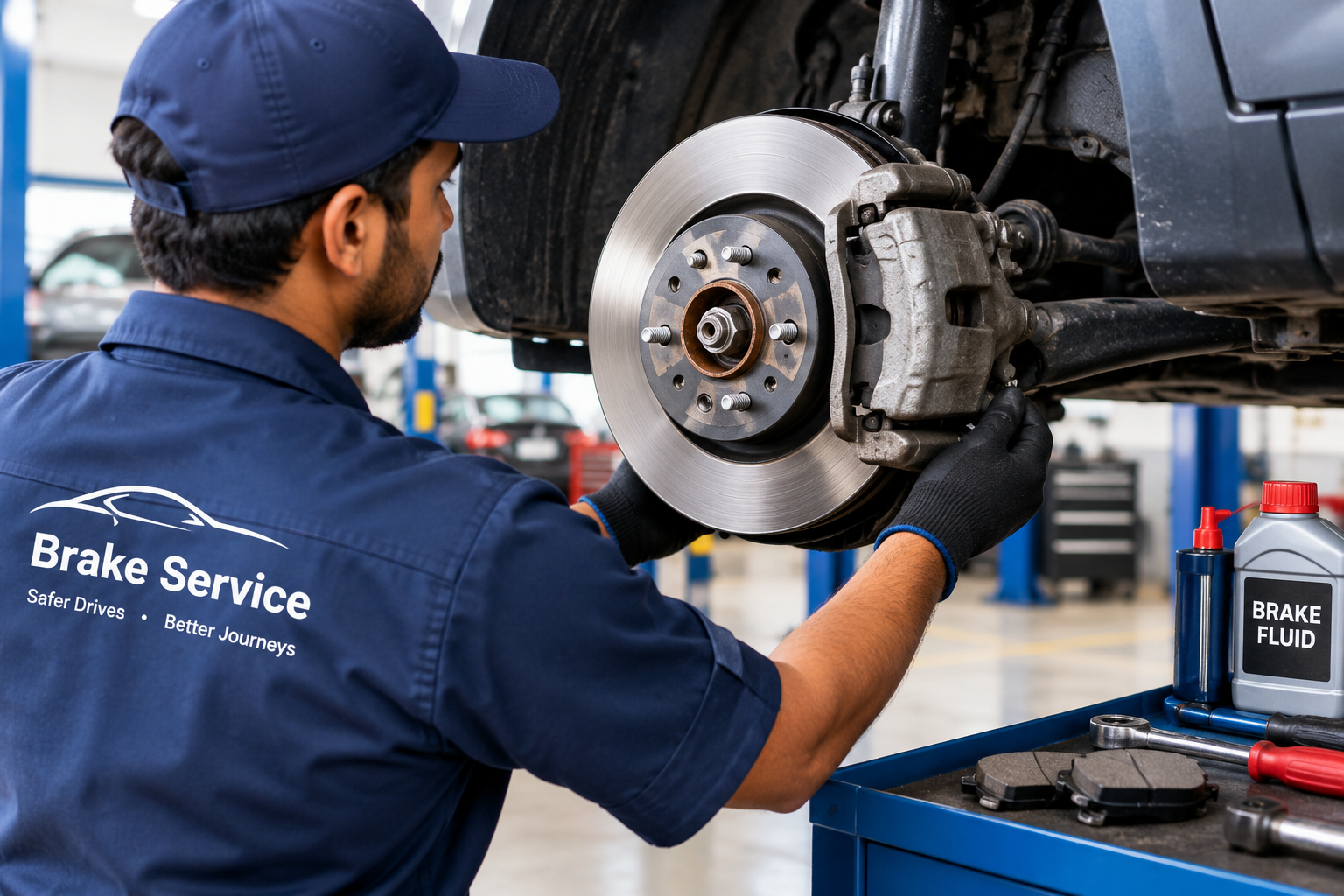
Brake Pad Inspection and Replacement
Brake pads gradually wear down through normal use. A technician checks their condition and replaces them when necessary, following the manufacturer’s specifications.
Brake Disc and Rotor Inspection
Brake discs and rotors need to remain within the manufacturer’s thickness and condition limits. A technician checks for excessive wear, cracks, scoring, and other damage.
Brake fluid transfers pressure through the hydraulic system. A professional can check its condition, fluid level, and signs of leakage, and recommend replacement according to the manufacturer’s schedule.
How Often Should You Get Car Brake Service?
The correct brake service interval depends on your vehicle, driving habits, road conditions, and the manufacturer’s recommendations.
Frequent driving in heavy traffic, hilly areas, or stop-and-go conditions can increase brake wear. Have your brakes inspected during routine servicing and whenever you notice unusual noises, vibrations, warning lights, or changes in pedal feel.
How Can You Prevent Common Car Brake Problems?
Regular inspections help identify worn components and potential problems early. Follow the recommended service intervals in your owner’s manual.
Avoid Unnecessary Hard Braking
Maintain a safe following distance and anticipate traffic conditions. Smooth braking, when safe and appropriate, can help reduce unnecessary wear.
Check for Warning Signs
Pay attention to unusual noises, changes in pedal feel, fluid leaks, and dashboard warnings. Early inspection can help prevent minor issues from becoming more serious.
When Should You Visit a Car Workshop?
You should arrange a professional inspection if you notice persistent squeaking, grinding, vibrations, uneven braking, or a brake warning light.
If the brakes suddenly become weak, the pedal sinks, or the vehicle cannot stop normally, do not continue driving. Stop safely and arrange roadside assistance or recovery.
At New Star Best Motor, we can help inspect your braking system and identify the repairs or maintenance your vehicle requires. Contact our workshop to discuss your brake service needs.
Conclusion
Your braking system plays a vital role in vehicle safety. Recognising the five warning signs—unusual noises, a soft brake pedal, pulling to one side, vibrations, and dashboard warning lights—can help you identify brake problems before they become more serious.
Regular brake service and timely brake repair help maintain dependable braking performance. If you notice any warning signs, arrange a professional inspection before continuing your normal driving routine.
Frequently Asked Questions (FAQs)1. What are the common signs that my car brake service?
Common signs include squeaking or grinding noises, a soft brake pedal, pulling to one side, vibrations while braking, and persistent brake warning lights.
2. Can I drive my car if the brakes are making a grinding noise?
Grinding can indicate serious brake wear or damage. Stop driving when safe and arrange a professional inspection or vehicle recovery.
3. How much does brake repair cost?
The cost depends on the vehicle model, the parts required, and the type of repair. A workshop inspection is needed to provide an accurate estimate.